
Farm and Station Weddings in New Zealand

"Farm wedding" and "barn wedding" get used almost interchangeably in New Zealand wedding planning, and that's a genuine problem for anyone actually trying to book one. A purpose-built barn venue is a business that exists to host weddings. A working farm or high-country station is a business that exists to run stock, grow crops or manage land, and a wedding is something it might also host. Both can look similar in photos. What they actually ask of you beforehand is not similar at all.
At a glance
A working farm or station is a farming business first, an events venue second, or not at all.
Power, toilets and sealed parking are often things you'll be sourcing yourself, not things the property already has.
Real stock and working terrain are part of the character, but also part of the planning.
A farming family hosting a wedding is usually doing it far less often than a dedicated venue's staff.
Why the two get lumped together, and why that's a mistake
Search "farm wedding venue New Zealand" and you'll get converted barns, custom-built rustic function spaces, and genuine working farms all mixed into one aesthetic category: exposed beams, hay bales, string lights, a paddock view. The look can be near-identical. The proposition behind it isn't. A purpose-built venue has done this dozens or hundreds of times and built its whole operation around doing it smoothly. A working farm is usually doing it occasionally, sometimes for the first time, on land that has to keep functioning as a farm the next morning.
That distinction matters most in the details a couple doesn't think to ask about until it's suddenly their problem to solve.
What a purpose-built barn venue is actually set up to provide
A dedicated barn or rustic event venue typically comes with power already run to the building, permanent or semi-permanent toilets, a defined car park, tables and chairs either included or arranged through the venue's own hire relationships, and a wet-weather plan baked into the building itself, the barn is the shelter. An events coordinator who has run this exact space many times before usually manages the run sheet, the vendor access times, and the handover between ceremony and reception setup.
None of that is a given on a working property, and it's worth knowing exactly which pieces you'll be sourcing yourself before you fall in love with a location.
Power, water and toilets on a working property
Farm buildings like woolsheds, implement sheds and hay barns were built for stock and machinery, not events, and plenty of them were never wired for anything beyond a single work light. A generator, hired specifically for the day, is a genuinely common and workable solution, but it's an extra booking, an extra cost, and something that needs positioning away from the ceremony for noise reasons, none of which a purpose-built venue's couples ever have to think about.
Toilets follow the same pattern. Unless the farmhouse itself is close enough and the family is happy to have eighty guests trooping through it, a portable toilet hire is standard for a rural property event, exactly the kind of logistics our guide to marquee and tent hire already covers for other rural Auckland venues. Water for catering, hand-washing stations, and even a reliable phone signal for vendors to coordinate on the day are all worth confirming directly with the property, rather than assumed.
Parking, access and weather on farmland
A sealed car park handles rain without a second thought. A paddock does not. A week of heavy rain before your date can turn a perfectly good grass parking area into something cars genuinely get bogged in, and that's a real, farm-specific risk rather than a remote what-if. Access roads to more remote stations are sometimes unsealed, which is fine in good weather and a genuine problem in bad, particularly for guests unfamiliar with rural driving or for vendors bringing hire equipment in a low-clearance vehicle.
A wet-weather backup on a working farm usually means an actual working shed rather than a styled function room, useful, but worth seeing in person and planning around before the day, not discovering as a surprise.
A wet-weather backup on a working farm usually means an actual working shed rather than a styled function room, useful, but worth seeing in person and planning around before the day.
Real animals, real terrain: what to expect on the day
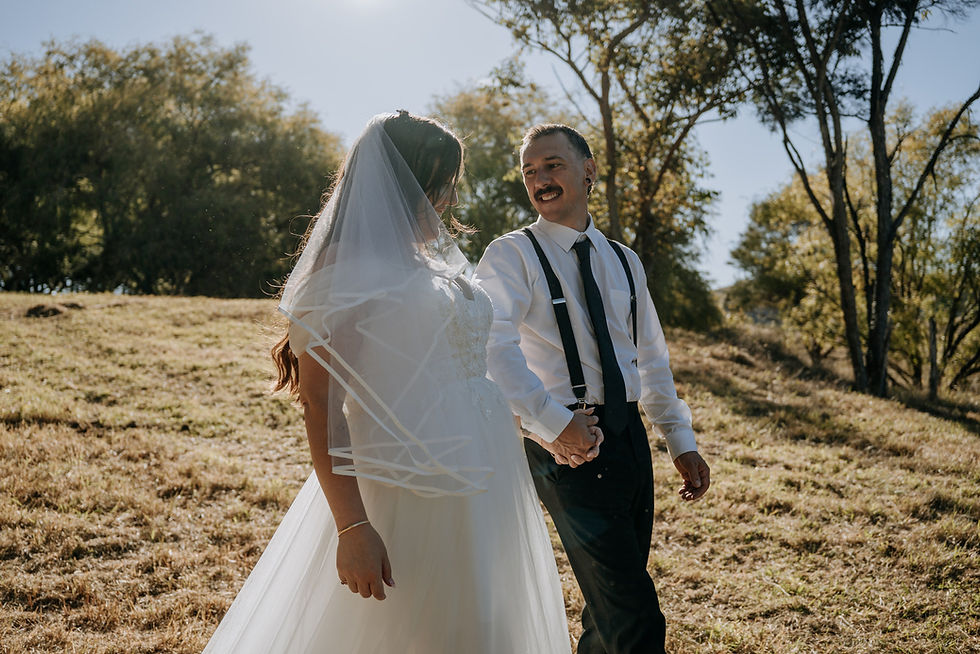
Stock doesn't know it's your wedding day. Sheep, cattle or, on some high-country stations, deer are still part of daily farm life, and the land itself is shaped by that use, gates, tracks, stock yards, water troughs and fence lines rather than a landscaped lawn. Some stations lean into this on purpose, letting guests genuinely experience a working property, with animals visible in the distance as part of the day's character rather than something managed out of view.
That's a real drawcard for a lot of couples choosing this over a manicured venue. It also means dust in a dry summer, mud after rain, and terrain that isn't groomed for heels or a wedding dress hem, worth factoring into footwear and timing choices for photos away from the immediate ceremony area.
Who's actually coordinating your day
A barn venue's staff have run the exact ceremony-to-reception handover before and know where every vendor needs to be and when. A farming family hosting a wedding on their own land is usually doing this far less often, sometimes for the first and only time, which means more of the coordination genuinely lands on the couple: briefing the generator and portaloo companies on where to set up, working out a day-before access window for marquee and furniture delivery, and having a clear point of contact on the property who isn't also trying to run the farm that day.
How working land actually photographs
This is where the trade-offs start paying off. Working terrain and real animals produce photos that don't look like every other wedding gallery from the same regional venue, because no two working properties are laid out the same way, and nothing about them was styled for a camera. Open high-country land at golden hour, with real hills and real light rather than a landscaped backdrop, is genuinely hard for a purpose-built venue closer to town to match. The honest advice: plan around the practical gaps rather than assume they won't matter, and the working-farm setting will earn its keep in the photos.
Questions worth asking before you book
Before committing to a working farm or station, ask directly: is there power to the ceremony and reception sites, or will a generator be needed? Where's the nearest toilet facility, and is portable hire expected? What happens to guest parking if it rains heavily beforehand? Is there a genuine indoor wet-weather space, and can you see it in person? Who on the property will be your point of contact on the day itself, and have they hosted an event here before? None of these questions are awkward to ask, and a property used to hosting weddings, even occasionally, should have straightforward answers.
Frequently asked questions
Is a farm or station wedding cheaper than a purpose-built venue?
Not automatically. The venue hire itself is sometimes lower, but generator hire, portable toilets, marquee and furniture hire, and extra coordination time can bring the real total closer to a purpose-built venue's all-in price than couples expect. Get a genuine itemised estimate before assuming it's the cheaper option.
Do we need a permit for a farm or station wedding?
Generally no, since it's private land, though check whether the specific property borders or includes any DOC-managed conservation land, which carries its own separate rules covered in our guide to DOC permits in national parks.
What happens if it rains?
Ask the property directly what the actual wet-weather space is, a genuine working shed rather than a styled marquee, and see it in person before you rely on it. Rain also affects paddock parking and access roads, worth planning a contingency for guest transport too.
Booking a working farm or station?
Tell us about the property and we'll help you think through what the day genuinely needs, wet-weather backup included, well before it becomes a last-minute scramble.


Comments