
Beach and Waterfront Wedding Venues Around Auckland

Updated: Sep 29
Auckland sits on two harbours and within reach of two very different coastlines, and a genuine share of local weddings use one of them. Some couples book a private beach property that runs the whole day. Others hire a waterfront function room, or plan a ceremony on a public beach and build the rest of the day elsewhere. These aren't the same booking, and mixing them up is where beach-wedding planning goes wrong.
This guide works through the real options and the planning detail that's genuinely different about getting married near water: tide timing, wind, and what sand does to furniture, aisles and hair that a lawn never has to deal with.
At a glance
A private beach venue, a waterfront function room and a public beach ceremony are three different bookings, with different costs and inclusions.
A public beach or coastal regional park covers the ceremony only, and needs its own council permit well ahead of the date.
Tide timing changes what's possible on the sand, plan your ceremony time around the tide, not the other way around.
Wind, not rain, is the coastal factor most couples underestimate, it affects hair, sound and decor on a clear day too.
What "beach and waterfront" actually covers around Auckland
Three different bookings sit under this one category. A private beach or waterfront venue is a property you hire exclusively, sometimes with catering, a celebrant and accommodation built in, sometimes just the site itself. A waterfront function venue, a yacht club, a boating club, a harbourside function room, sits on or beside the water without the sand being part of the ceremony. A public beach or coastal regional park is council or park-trust land with real limits on exclusivity and what's included. Our Auckland Wedding Venue Guide covers this category briefly alongside six others; this guide is the detail specific to water.
Private beach and waterfront venues that handle most of the day
Auckland's west coast has at least one genuine destination-style beach venue: Bethells Beach Cottages at Te Henga, a private property with a ceremony lawn above the black-sand dunes, pavilion dining for around 70 guests, an on-site celebrant and bridal-party cottages for the night. It runs the whole day on one property, so guests aren't travelling between separate sites.
Waterfront function venues take a different form. Wakatere Boating Club sits directly on Narrow Neck Beach, Devonport, its hall opening onto a deck facing the sand, one of the few genuinely self-catering venues in Auckland, BYO brings the cost down but shifts more coordination onto you. The Royal New Zealand Yacht Squadron at Westhaven runs eight fully catered function spaces up to a 400-guest ballroom with harbour views instead, and several other yacht and boating clubs around Mission Bay and Kohimarama run a similar model. What all share is infrastructure a bare public beach doesn't have, power, toilets, weather-tight walls, worth real money weighed against a public site once everything else is added.
Getting married on a public beach or in a coastal regional park
A ceremony on an open public beach, or in a coastal regional park, sits under Auckland Council's own event and wedding permit process, worth starting as soon as a date is set. Our guide "Photographing Weddings in Auckland's Public Parks and Gardens" already works through how Council's general open-space permit timing scales with an event's size and impact, from around six weeks' notice for a low-impact ceremony up to several months for anything larger, and the same scaling applies here.
The other point worth understanding early: a public beach or regional park covers the ceremony only, with no reception space and no exclusive use of the beach, other beachgoers and locals stay present throughout. Every public beach ceremony pairs with a separate reception venue elsewhere, worth factoring into the timeline, not just the budget.
A public beach or regional park covers the ceremony only, with no reception space and no exclusive use of the beach, other beachgoers and locals stay present throughout.
Why tide timing should shape your ceremony time
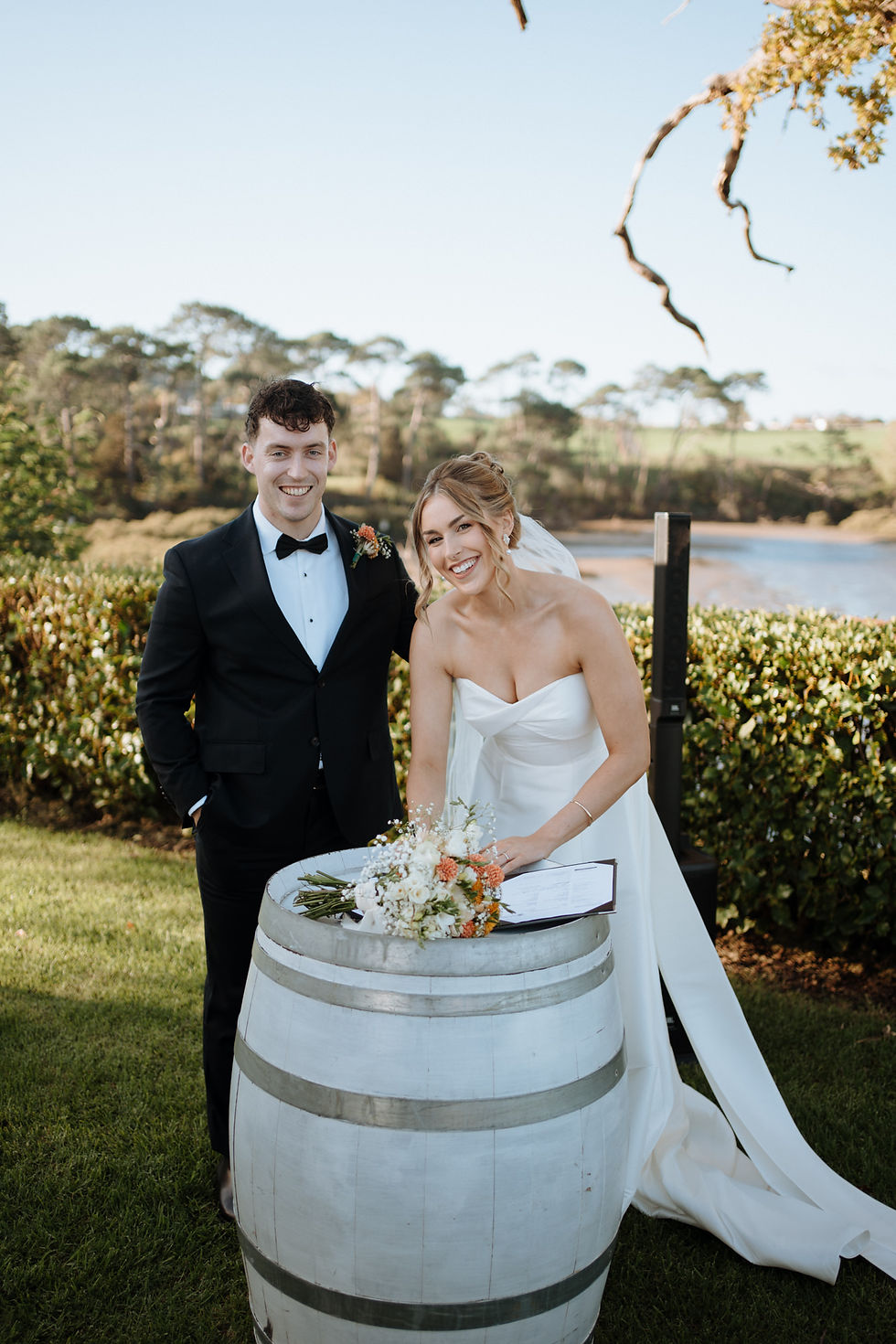
This is the one planning factor a beach ceremony has that almost nothing else does. Low tide opens up dry, walkable sand and exposes rock features worth photographing, Piha's Lion Rock base, Bethells' dune caves, while high tide can push the usable sand right up against the dunes, sometimes leaving barely enough room for chairs and an aisle. It matters most on the west coast, where the surf itself is a real safety consideration, not just an aesthetic one. East coast bays and the inner harbour are more forgiving, the shoreline moves less dramatically there.
Tide times shift by roughly 25 minutes a day and don't move to suit a wedding date. Checking NIWA's tide predictions or MetService's marine tide forecast for the actual date, months out and again close to the day, should genuinely inform when the ceremony is scheduled, not the other way around. A 4pm ceremony that looked fine on a site visit in March can sit at a completely different tide stage in November.
Wind: what it actually does to hair, dress, sound and decor
Wind, not rain, is the coastal factor most couples underestimate, it's easy to picture a still, sunny beach day and forget how often Auckland's coastline doesn't deliver one. Spring can turn genuinely blustery within a single afternoon, and an exposed west coast beach facing the prevailing westerly runs windier than a sheltered eastern bay. This doesn't mean avoiding a windier season, just asking which way the site faces and checking wind as closely as rain.
A few decisions help. A PA system or lapel microphone matters more on an open beach than almost anywhere, wind and surf noise both eat into what guests further back can hear. A flowing veil looks beautiful in a light breeze and becomes a genuine hazard in a strong one, some brides choose a shorter veil, or none, for the ceremony and save a longer one for sheltered portraits. Any structure, an arch, a marquee, even a sign, needs real weighting on an exposed beach, well beyond what it would need on a sheltered lawn.

Sand logistics: furniture, aisles, footwear and access
Sand behaves differently from grass under a ceremony setup. Chairs with slim legs sink and tilt in soft sand, wide-based feet or hire furniture built for it keeps a row of seated guests level, and a rolled matting or timber-plank aisle instead of loose sand makes a genuine difference for anyone in heels. It's worth checking firm-ground access from the car park for older guests or anyone with limited mobility. On a public beach, a generator, shade and toilet hire are things to actively budget for, not details that sort themselves out because the site looked simple on a visit.
A photographer's-eye look at shooting near water and wind
Open water throws far more light back at a lens than grass or trees do. A ceremony facing straight out to sea at midday often leaves the celebrant and guests lit evenly while the couple, facing the water, squint into hard backlight. Positioning the ceremony line so neither faces directly into open water at the brightest part of the day solves most of this. That same backlight becomes the day's best asset once the sun drops lower, an hour or so before sunset, when shooting toward the water gives a striking silhouette and rim-light effect on portraits that's hard to get anywhere inland, worth timing separately from the ceremony's tide-driven slot.
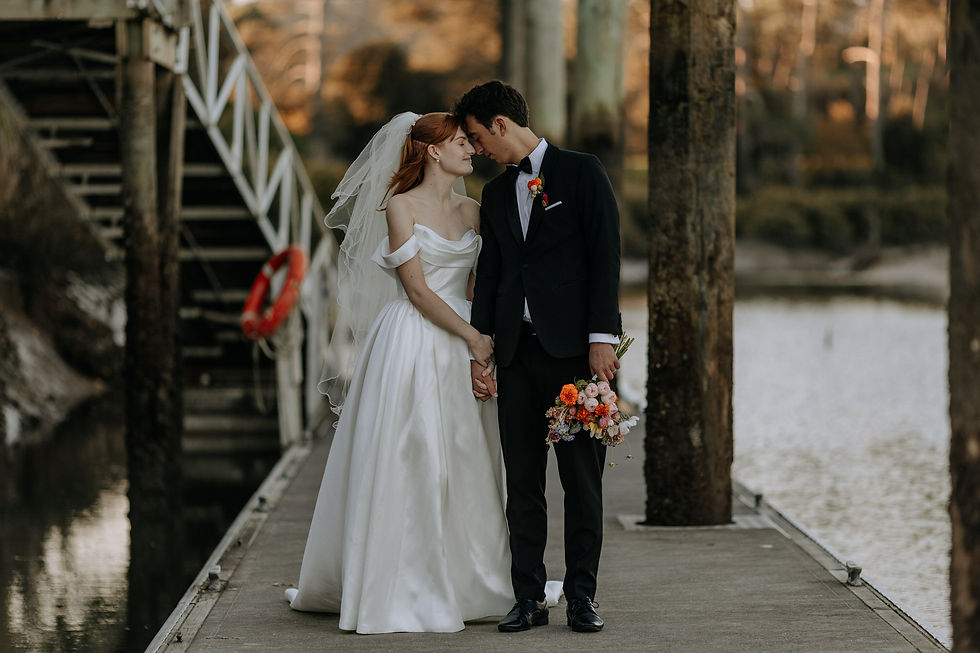
Wind has its own upside once you stop fighting it. A veil or dress fabric caught mid-movement tends to photograph as genuinely alive rather than a problem to edit around. The practical fix, facing the ceremony and portraits with the wind from behind or the side rather than straight on, keeps hair and veils moving in a flattering direction instead of across someone's face mid-vow.
Weather backup for a beach ceremony
A beach or waterfront ceremony needs the same honest backup conversation as any outdoor booking, covered in full in our Wedding Day Rain Plan guide. A public beach has no built-in backup at all, so a nearby indoor space or marquee, confirmed in advance rather than found on the morning, is essential in a season with any real rain risk.
Frequently asked questions
Can we actually get married on a public beach in Auckland?
Yes, through Auckland Council's event and wedding permit process, but it covers the ceremony only, with no exclusive use of the beach and no reception space included.
What's the best time of day for a beach ceremony?
That depends more on tide than light. Check tide times for the date first, fit the ceremony around whichever stage suits the site, and plan portraits for the hour before sunset separately.
Does wind ruin beach wedding photos?
No, it changes them. A well-positioned ceremony, wind from behind or the side, not straight into faces, turns movement in hair and fabric into some of the day's most genuine images rather than a problem.
Planning your own wedding?
Weighing up a private beach venue, a waterfront function room or a public beach ceremony? Tell us the site and we'll help you plan the timing and the shot list around it.


Comments