
Autumn and Winter Weddings in Auckland

Updated: Sep 29
Auckland weddings cluster hard into summer, and for understandable reasons. But a genuine share of the couples we photograph choose autumn or winter on purpose, and the reasons usually aren't just about price. The light behaves differently in a way most people don't expect until they see their own photos, and the planning is more straightforward than the reputation suggests.
At a glance
Auckland winter means cool and wet, not cold and white. No snow, and frost at sea level is rare.
Cloud cover gives soft, even light for most of the day, genuinely easier to shoot flatteringly than summer's narrow golden hour.
The shortest day of the year gives roughly 9 hours 40 minutes of daylight, so the day-of timeline needs to shift earlier.
Off-peak dates often mean real savings and far better vendor and venue availability.
Quick numbers
Avg winter high: 14-15°C
Rain days per month: ~15-16
Shortest day: ~9h40m daylight
Off-peak venue fee: from $699*
What autumn and winter actually feel like in Auckland
Auckland doesn't get a northern-hemisphere winter. There's no snow, no ice, and frost at sea level is rare. What you actually get is cool and wet, not cold and white.
Average temperatures sit around 8-15°C through June, July and August, with July typically the coldest month. Rain falls on roughly 15-16 days a month over winter, usually 120-145mm total, and June is statistically the cloudiest month of the year in Auckland. Autumn is gentler: March still carries real summer warmth, and by May the daytime range has settled to roughly 11-17°C with rain spread across about 12 days a month.
None of this means constant downpours. It means grey, changeable days are common, and a wedding day with at least some dry, overcast weather is the realistic expectation rather than the exception.
The light: why photographers quietly love this half of the year
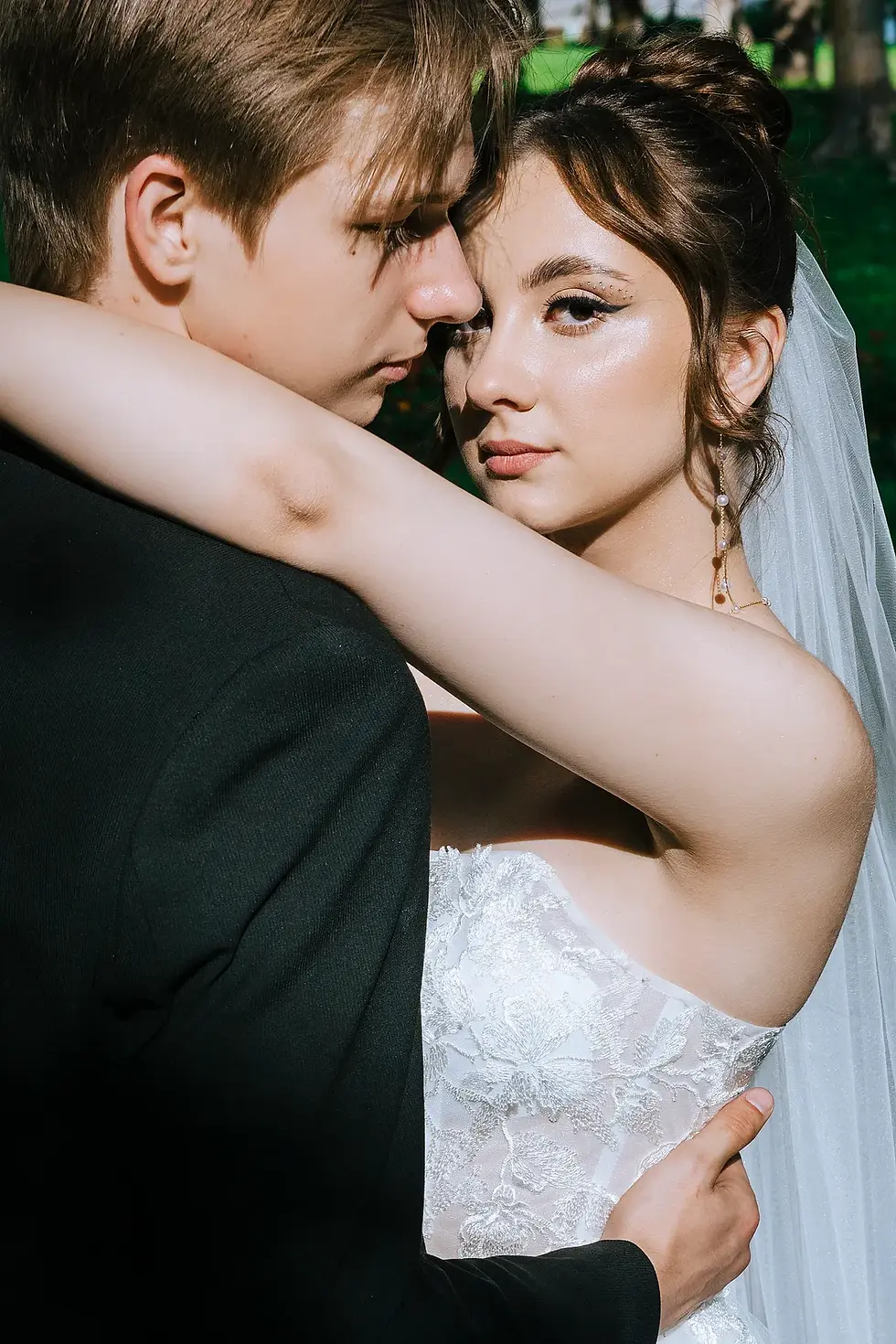
Summer gives you a handful of hours either side of sunrise and sunset where the light is genuinely flattering, and a long stretch in the middle of the day where it isn't. Winter and late autumn flip that. Cloud cover acts like a giant diffuser, so the harsh, high-contrast sun that causes squinting and hard shadows under the nose barely shows up at all. For most of an autumn or winter day, the light is soft, even, and directional in a way that's genuinely easier to shoot well, not just tolerable.
That matters most for group photos and any portrait taken outside a tight golden-hour window. A wedding party of forty people photographed at 1pm in July looks noticeably more even and comfortable than the same group at 1pm in January, because nobody in the back row is fighting overhead glare.
Winter and late autumn flip that. Cloud cover acts like a giant diffuser, so the harsh, high-contrast sun barely shows up at all.
Daylight hours and what they mean for your day-of timeline
The trade-off is simply less daylight to work with. Auckland's shortest day, the winter solstice around 21 June, runs to roughly 9 hours 40 minutes of daylight, compared with well over 14 hours at the summer solstice. Sunrise sits around 7.15-7.25am through June and July, and sunset lands somewhere between about 5.05pm and 5.25pm across the same window. Autumn shifts fast by comparison: April alone can lose close to an hour of evening light once daylight saving ends on the first Sunday of the month.
In practice, this means the whole day-of schedule needs to shift earlier. Ceremony, family photos and couple portraits all need to happen with less margin before the light drops, so a 4pm winter ceremony leaves a much shorter window than the same start time in summer. Our separate guide on ceremony timing works through how the right start time shifts by season in more detail, since the ideal slot for a winter date is genuinely earlier in the afternoon than most couples first assume.
Indoor venues, heating and staying warm without losing the atmosphere
A cooler-season wedding usually means an indoor ceremony and reception space, or at minimum a genuine indoor backup, matters more than it would in summer. The venues that handle this well treat it as a reserved space built into the booking, not a marquee thrown together on the day, which is exactly the decision our wedding day rain plan guide walks through in more detail.
If you're using a marquee or a covered outdoor space at a private site, heating and lighting stop being optional extras and become standing line items, the same as catering or furniture. Roof-line rigs, marquee attachments that run directly off the house or building rather than leaving a gap to the exterior, are specifically worth asking about for a cooler-month wedding, since they close off the draught point that a freestanding tent can't.
Warm, low, ambient lighting also does double duty. It keeps guests comfortable and it photographs and films beautifully once the sun's gone, which happens noticeably earlier than most couples plan for on a winter date.

What's actually in bloom: autumn and winter florals
Winter is the leanest season for garden-grown blooms in New Zealand, but "leanest" doesn't mean bare. Camellias and hellebores are reliable NZ winter garden flowers, and commercially grown stock, Colombian roses, freesias, cymbidium orchids and early tulips, is realistically available through May to August. Autumn is more generous again: dahlias often carry on from summer, alongside chrysanthemums, asters and late roses.
The practical upside is texture. Winter arrangements lean more on foliage, greenery and structure than a summer bouquet built almost entirely around bloom colour, and that reads differently, and often more strikingly, in photos. It's a different look, not a compromised one.
Availability, pricing and what off-peak actually gets you
Vendors and venues genuinely do have more room to move outside summer. One real Auckland venue's own published pricing shows the scale of the gap directly: a winter weekday booking starts from $699, against up to $3,099 for an equivalent peak-season booking, with a smaller "compact" format cutting the fee by roughly 40% again. Not every venue's spread will match that exactly, but the direction and the scale of the gap are genuinely representative of what off-peak buys you.
Photographers, videographers and caterers tend to follow the same pattern: fewer bookings competing for the same date, which usually means more flexibility on timing, easier access to a specific vendor you actually want, and often a better rate, though it's always worth asking directly rather than assuming a fixed discount.
Frequently asked questions
Does it always rain on winter Auckland wedding days?
No. Rain falls on roughly half the days in a typical winter month, which means plenty of dry days too, and a solid indoor backup covers the ones that aren't.
Is a winter wedding actually cheaper in Auckland?
Often, yes, though the exact gap varies by venue and vendor. A real published example shows a winter weekday venue booking running from under a third of an equivalent peak-season rate, and vendor availability tends to follow the same pattern.
What's the coldest month to get married in Auckland?
July, typically, with average daytime highs around 14°C and overnight lows around 8°C.
Do Auckland wedding venues actually have heating?
Many do, particularly venues built for year-round events, but it's worth confirming directly rather than assuming, and asking specifically what's included versus what you'd need to hire in.
An autumn or winter date isn't a fallback option for an Auckland wedding. It's a genuine choice with its own light, its own florals and its own trade-offs, and for a lot of couples, once they see the actual photos, it turns out to be the one they'd pick again.


Comments