
Wedding Dress Shopping in Auckland

Most engaged couples plan a wedding backwards from the date: venue first, then the vendors that need locking in early, then everything else. The dress usually gets treated as one of the "everything else" items, tried on for fun a few times before anyone thinks seriously about timelines. That's the wrong order. A wedding dress has its own production and alteration lead time, separate from every other vendor booking, and it's worth understanding early rather than discovering it under pressure three months out.
This guide covers where Auckland brides actually shop, how the three main buying pathways differ, what alterations really cost and take, and how to budget for the dress as a whole project rather than a single price tag.
Bridal precinct: Newmarket
Buying pathways: Off-the-rack, made-to-order, custom
Book alterations: ~8 weeks out
Alterations cost: ~$400-$1,400
At a glance
Auckland has a genuine cluster of dedicated bridal boutiques, with Newmarket functioning as something of a local bridal precinct.
There are three real buying pathways, off-the-rack, made-to-order, and fully custom, each with a different cost and timeline.
Alterations are a separate cost and appointment from the dress purchase, typically booked around 8 weeks out.
Budget for the dress, alterations, and accessories as three separate line items, not one number.
Where Auckland brides actually go dress shopping
Auckland has enough dedicated bridal retail that dress shopping doesn't need to mean a trip to Sydney or an overseas ordering gamble. Newmarket in particular has developed into something of a bridal shopping precinct, home to Astra Bridal's main Auckland store among other boutiques nearby, and it's a sensible first stop simply because you can compare several options within a short walk of each other.
Beyond Newmarket, the wider market includes NZ-based designers and boutiques such as Anna Schimmel Bridal and Jessica Couture, along with retailers like Dell'Amore and Modes carrying a broader mix of local and international bridal labels. Astra Bridal also runs a separate North Shore store, useful if crossing the bridge for every appointment isn't appealing. None of these are the only options, but they're real, currently operating businesses worth using as a starting list rather than searching blind.
A first appointment is usually about narrowing silhouette and fabric preferences more than finding "the one" on the first visit. Most boutiques work by appointment, so book ahead rather than turning up expecting a walk-in fitting room.
The three ways to buy a wedding dress
Every wedding dress purchase in Auckland falls into one of three categories, and they behave very differently on cost and timing.
Off-the-rack or sample dresses are already made, in a boutique's current stock or sample range, and can sometimes be taken home the same day or with only minor alteration. This is the fastest and usually cheapest route, and it's the only realistic option if your wedding is close and you haven't started dress shopping yet.
Made-to-order is the most common path through a boutique appointment. You choose a designer's existing style and it's produced to your size from their standard pattern, arriving as a new, unworn garment months later rather than off a rack. This is where most brides land, since it balances real choice with a manageable production timeline.
Fully custom means a dress built from your own measurements and design brief, from the first consultation. It gives the most control over fit and detail, and it's the slowest and generally most expensive route, since every stage is bespoke rather than working from an existing pattern.
None of these is automatically "better." A sample sale dress that fits well and photographs beautifully beats a custom dress rushed through with no time for proper fittings.
A realistic dress-shopping timeline
Because made-to-order and custom dresses both need production time before alterations even begin, dress shopping needs to start earlier than most other vendor bookings, not later. As a general guide, start trying on styles as soon as you have a wedding date and a rough sense of your budget, well before you'd normally start booking florists or entertainment.
The dress has its own production and alteration lead time, separate from every other vendor booking, and it's worth understanding early rather than discovering it under pressure three months out.
If you're working to a shorter runway, say under six months, lean toward off-the-rack or sample options and be upfront with boutiques about your date. A good bridal consultant will tell you honestly whether a particular designer or style is realistic for your timeframe rather than let you fall for something that can't be delivered in time.
Alterations: the cost and timeline nobody mentions upfront
This is the part most dress-shopping advice skips entirely. Even a dress that fits reasonably well off the rack or on arrival will usually need some alteration, hemming, taking in the bodice, adjusting straps, and a dress that needs more significant reshaping will need more time and more fittings.
Alter Me, an Auckland alterations specialist, publishes its own guidance on this: book your alterations appointment around 8 weeks before the wedding, earlier if your dress needs remodelling or several fittings. Turnaround on the actual work is typically 3 to 4 weeks, though busy wedding season can stretch that to 6 to 10 weeks, with rush fees sometimes available if you're tight on time. Their published pricing for bridal alterations runs roughly $400 to $1,400, depending on the construction of the dress and how much work the changes actually involve. A simple hem on a straightforward fabric sits at the lower end; reshaping a heavily boned or beaded bodice sits at the higher end.
Worth booking early
Treat alterations as their own appointment and their own budget line, booked as soon as your dress arrives rather than left until the weeks right before the wedding.
What to actually budget, beyond the dress itself
There's no reliable, verifiable "average" wedding dress spend in New Zealand worth quoting as fact, and most figures floating around online are pulled from overseas markets that don't reflect local pricing. What's more useful is understanding what actually drives the cost, so you can budget sensibly for your own choices rather than anchoring to a number that may not apply to you.
Fabric is a major driver: heavier structured fabrics and fine laces cost more to source and work with than simpler silhouettes. Hand-finishing, beading, and custom embellishment add labour cost on top of the base fabric. Whether the dress is made-to-order from an established label or fully custom changes the labour and design-time cost significantly. And sourcing matters too, a locally designed and made gown carries different cost structures to an imported style ordered through a retailer.
Once you've settled on a dress budget, add alterations ($400-$1,400 as a realistic Auckland range) and accessories (veil, shoes, jewellery) as separate line items rather than assuming they're absorbed into the headline dress price.
How your dress choice actually shows up in photos
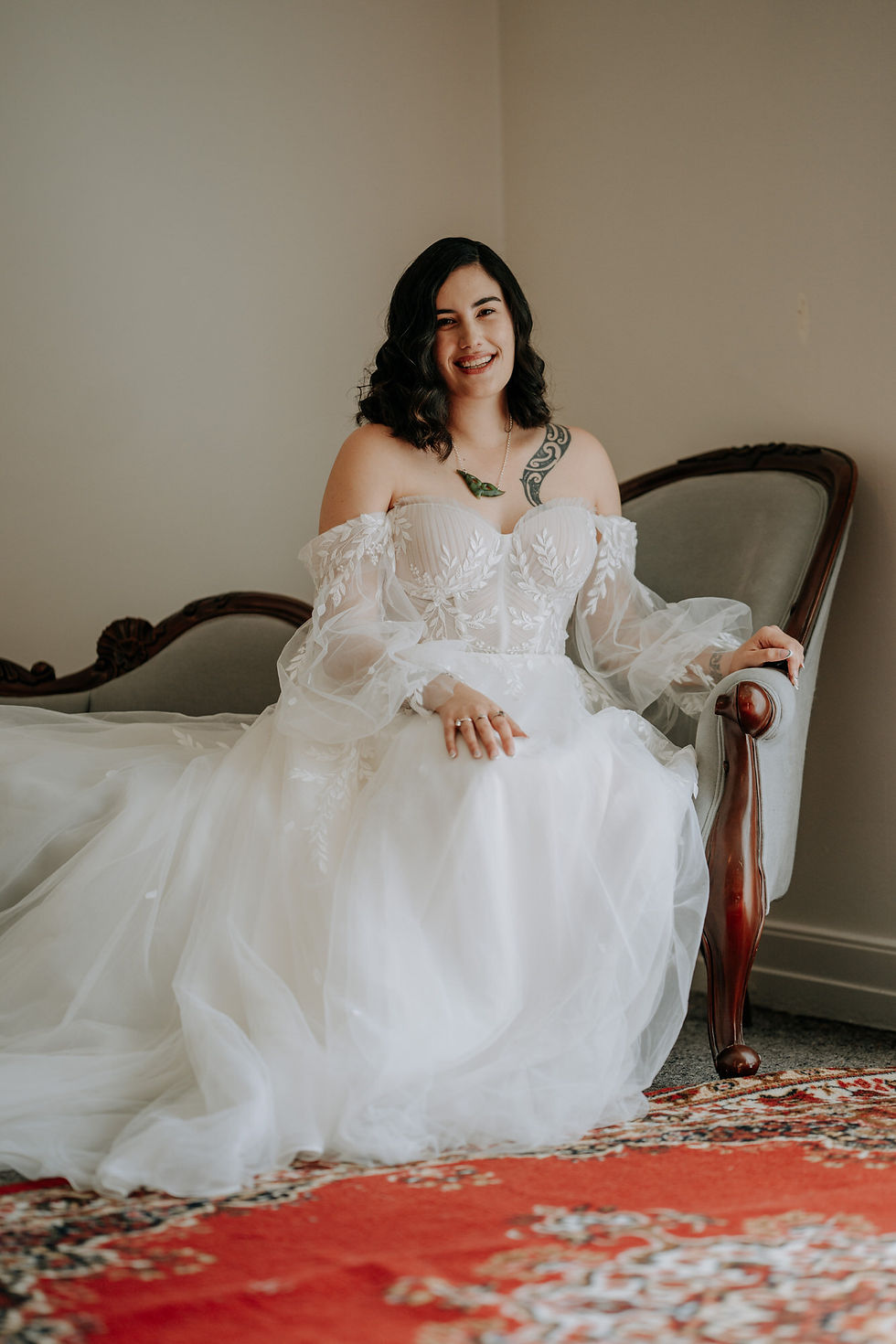
A dress that looks perfect standing still in a fitting-room mirror doesn't always behave the same way in motion. Heavier structured fabrics hold their shape beautifully for portraits but can look stiff walking down the aisle or during a first dance. Lighter, more fluid fabrics move more naturally in photos and video but show every crease if they've been packed or transported carelessly.
This is genuinely worth discussing with your photographer before the big day, not after. A short conversation about fabric weight, train length, and how you plan to move in the dress (dancing, sitting for a long reception, an outdoor ceremony with wind) helps set realistic expectations for both of you, and it means fewer surprises when you see the fabric behaving differently on camera than it did in the boutique mirror.
The other detail worth planning for early: your final fitting should happen with enough runway before the wedding that there's no last-minute scramble. A rushed alteration close to the date is one of the more avoidable causes of an ill-fitting dress showing up in every formal photo of the day.
Planning your own wedding?
Sorted on a dress and want to talk through how the fabric and train will actually move on the day? Tell us about it and we'll help you plan the portraits around it.


Comments