
How to Get Natural, Candid Wedding Photos (Not Stiff and Posed)

Most couples who say they want "candid" photos are really describing a feeling: photos that look like them, not like a stranger's idea of how a bride and groom should stand. Getting there is part photographer, part couple, and mostly about understanding what candid actually means before you book anyone.
At a glance
Candid means a moment that existed before the camera found it. Posed means the photographer arranged it. Neither is bad, bad posing is what feels stiff.
A photographer working candidly spends more time watching than shooting, so they're already positioned when something real happens.
Trying to "act natural" is its own performance. Being occupied with something real works better than trying to look relaxed.
The best way to check a photographer's real candid ratio is a full gallery from one wedding, not a curated highlight reel.
What "candid" actually means (and what it doesn't)
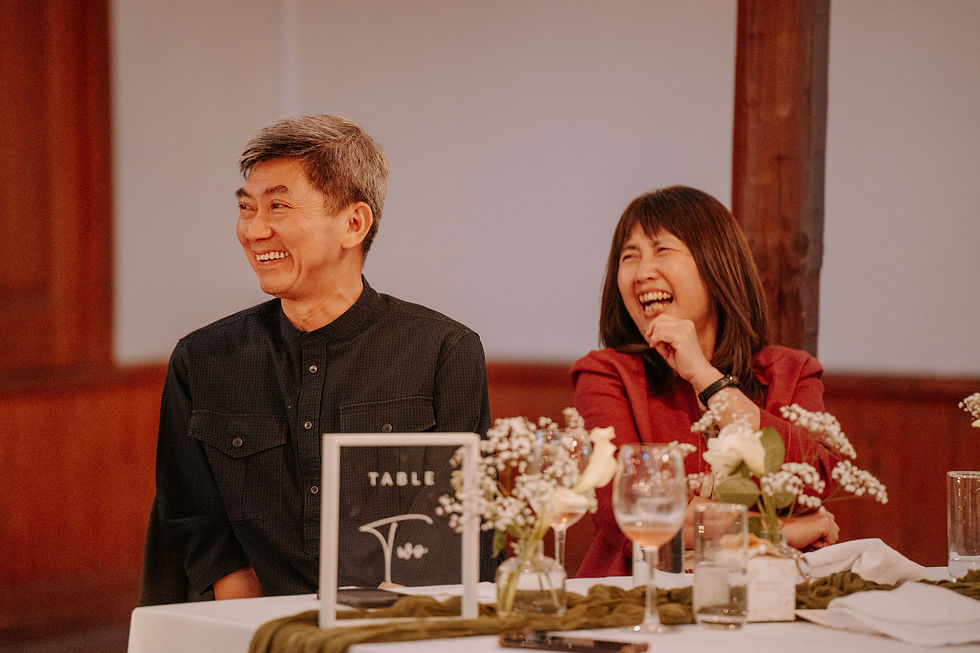
A candid photograph is one where the moment existed before the camera found it: a look between parents during the vows, a real laugh at a speech, the half-second before a first dance starts when nobody's quite sure where to put their hands. A posed photograph is one the photographer arranged, a direction to stand here, look at each other, hold that. Neither is inherently bad. The stiffness couples are actually reacting against when they say they don't want posed photos isn't posing itself, it's bad posing: a rigid instruction held too long, with nothing for the couple to actually do except stand still and think about the camera.
Some parts of a wedding day are always going to be organised rather than spontaneous, and that's fine. A big group photo needs someone arranging where twenty people stand. There's no candid version of getting both sets of grandparents into one frame before anyone wanders off (the wedding family photo list covers how to keep that part quick). What most couples actually want is for everything around those few necessary, organised moments to feel unarranged, and for even the arranged parts to feel warm rather than clinical.
What makes a photo feel candid instead of staged
The real difference is timing and attention, not equipment. A photographer working candidly spends more time watching than shooting: noticing the best man is about to well up before his speech, that a couple's hands have just found each other without being asked to, that a flower girl is one second from bolting for the dance floor. The shot comes from having already clocked what's about to happen and being positioned for it, rather than reacting cold once it's already over.
A candid photographer doesn't create the moment. They anticipate it, then get themselves ready for the moment that was already coming.
It's not simply about whether someone's looking at the camera, either. A couple can be told to look away from the lens and hold a pose, and that's still staged, just aimed in a different direction. What actually signals candid work is variety: imperfect timing, a hand still moving, a laugh mid-shape rather than a held grin, and reaction shots of guests who clearly don't know they're in frame at all.

What you can do, as a couple, to help without performing
Trying to "act natural" is its own kind of performance, and most people can tell when someone else is doing it, including through a lens. It usually shows up as a fixed almost-smile and eyes that keep flicking back to check if the camera's still there. The more useful goal isn't looking relaxed, it's being occupied enough with something real that you forget to check. Talk to your partner about something you're actually looking forward to that evening, not a line rehearsed for the photo.
Pacing matters more than most couples expect. A loosely scheduled portrait session leaves room for candid moments to actually happen; a timeline packed with no slack anywhere only produces the shots that were planned in advance. Couple portrait timing covers when to schedule that block for the best light, and the same window that gets good light also gives a documentary-minded photographer room to wait for something real instead of rushing to instructions.
The more useful goal isn't looking relaxed, it's being occupied enough with something real that you forget to check the camera.
The same logic holds later in the day. Slipping away from your own cocktail hour to knock out formal shots trades a room full of genuinely happy guests for an empty one, right when a lot of the best unplanned interaction tends to happen. If portraits need that window, doing a first look earlier in the day is usually the better trade, since it frees up the reception for actual mingling instead of photo duty.
What to ask a photographer about their candid approach before you book
A portfolio's highlight reel tells you almost nothing about how candid a photographer's day-to-day coverage actually is. Every photographer, however posed their usual work is, has a handful of genuinely good candid frames pulled from years of weddings. The single most useful thing you can ask for is a full gallery from one real wedding, ideally with a similar guest count and venue type to yours, not a curated selection.
How would you describe your own shooting style, and where does it sit between documentary and posed?
Can we see a complete gallery from a recent wedding, rather than a highlights selection?
Do your galleries include guests and reactions, or mostly the couple?
How much direction do you typically give during portrait time, and how do you approach it?
If we send through a family photo list, how does that fit around the rest of the day's coverage?
The answers matter more than the exact wording. A photographer who talks specifically about watching for moments, and can back it up with a full gallery, is telling you something real. One who can only offer a highlight reel and a vague "bit of both" is telling you something too.
Frequently asked questions
Does choosing a candid style mean we won't get any formal photos?
No. Almost every documentary-leaning photographer still shoots the organised group and family photos, they're just usually kept efficient and moved through quickly so there's more time left for everything else. Candid style is about how the rest of the day is covered, not a decision to skip formal photos altogether.
What if we don't like how we look in unposed photos?
This is a fair worry, and worth raising with a photographer directly rather than assuming candid means every imperfect frame gets delivered. Part of a photographer's job is culling: choosing the genuine expressions that flatter over the ones that don't, the same way they'd never hand over a blinking shot from a posed portrait either. It's also completely reasonable to ask for a mix, more posed portraits if you'd feel more in control of how you look, alongside candid coverage of the rest of the day.
Thinking about your own wedding photos?
If you've got a particular style in mind, real examples help more than a description. Send through a gallery or a couple of photos you love the feel of and we'll talk you through how we'd approach your day.


Comments